
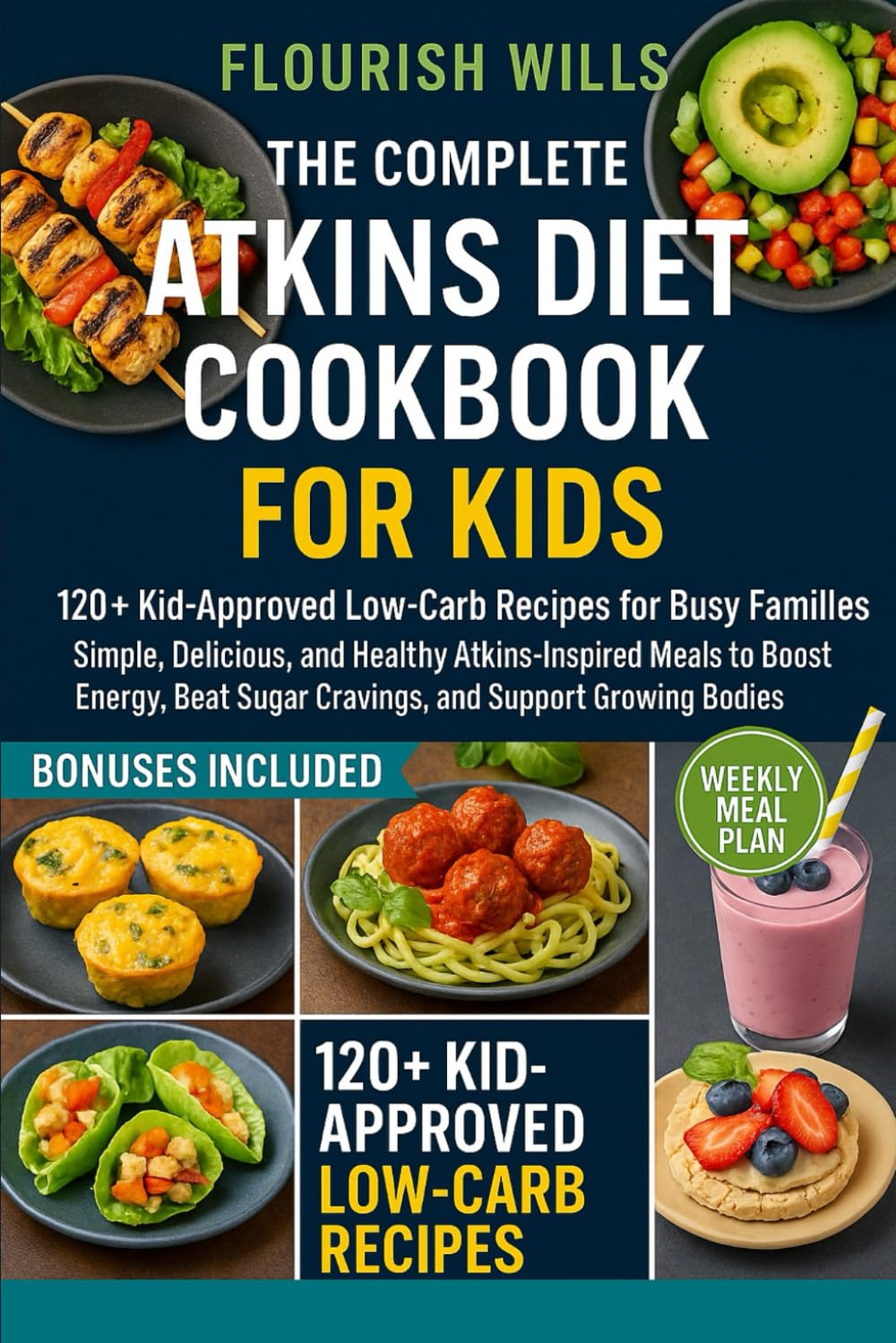
THE COMPLETE ATKINS DIET COOKBOOK FOR KIDS: +120 Kid-Approved Low-Carb Recipes for Busy Families: Simple, Delicious, and Healthy Atkins-Inspired Meals ... Sugar Cravings, and Support Growing Bodies
Product details
| Management number | 233477805 | Release Date | 2026/06/27 | List Price | US$7.32 | Model Number | 233477805 | ||
|---|---|---|---|---|---|---|---|---|---|
| Category | |||||||||
Introduction to the Atkins Diet for KidsThe journey of healthy eating for children often comes with both excitement and challenges. Parents are constantly looking for the right balance between providing nutritious meals and ensuring that children enjoy what they eat. The Atkins diet, known worldwide for its low-carbohydrate approach to weight management and overall wellness, may seem like a plan designed for adults. However, when adapted carefully and responsibly, its core principles can be used to support healthier eating habits in children. This introduction explores the history of the Atkins diet, its basic structure, and how it can be modified in a child-friendly way to meet growing nutritional needs.The History of the Atkins DietThe Atkins diet was first introduced in the early 1970s by Dr. Robert C. Atkins, a cardiologist who sought to create a dietary plan that not only helped individuals lose weight but also improved metabolic health. His philosophy was built on the idea that processed carbohydrates—such as white bread, sugary snacks, and refined grains—were major contributors to obesity, heart disease, and other chronic health problems. By reducing carbohydrate intake and encouraging nutrient-dense proteins, healthy fats, and vegetables, the diet became a groundbreaking alternative to traditional calorie-counting approaches.Over the years, the Atkins method gained popularity worldwide, especially as research began to show that low-carbohydrate eating could support weight loss, stabilize blood sugar levels, and improve energy. While the original Atkins diet was aimed primarily at adults, its evolution has led to flexible adaptations, many of which can be thoughtfully applied to children’s meals with safety and balance in mind.Why Consider Atkins Principles for Children?Children today are often surrounded by processed foods—fast food meals, sugary drinks, packaged snacks, and desserts that are easy to access but often low in nutrition. This environment contributes to rising cases of childhood obesity, type 2 diabetes, and other health challenges that used to be rare among younger populations. Parents and caregivers are now seeking ways to help their children eat better, stay active, and avoid the long-term consequences of poor dietary habits.The Atkins approach, when adjusted for children, is not about strict dieting or calorie restriction. Instead, it is about:Reducing reliance on processed carbs and sugars to encourage better energy balance and concentration.Introducing more whole foods such as lean proteins, vegetables, nuts, seeds, and low-sugar fruits.Teaching mindful eating habits so kids learn to listen to hunger cues and make better choices.Supporting steady energy levels by balancing blood sugar through fewer refined carbs and more stable protein-and-fat combinations.When framed as a lifestyle rather than a “diet,” Atkins principles can guide children toward healthier eating patterns that will serve them throughout life.Making Atkins Child-FriendlyIt is crucial to note that children are not small adults. Their bodies are still developing, and they need a wide range of nutrients for growth, brain development, and strong bones. This means that while some elements of the Atkins diet can benefit kids, adjustments must always be made to keep their meals balanced and nourishing.For example, whereas an adult following Atkins might limit carbs very strictly in the initial phases, a child’s version would still include healthy carbohydrates like:Whole fruits (especially berries, apples, and oranges).Whole grains such as oats, brown rice, or quinoa in moderate amounts.Starchy vegetables like sweet potatoes and carrots, which provide fiber and vitamins.These inclusions ensure children do not miss out on essential nutrients while still benefiting from reduced sugar and refined carb intake. Read more
| ASIN | B0FVWCMS4P |
|---|---|
| ISBN13 | 979-8269234908 |
| Language | English |
| Publisher | Independently published |
| Dimensions | 6 x 0.45 x 9 inches |
| Item Weight | 12.6 ounces |
| Print length | 197 pages |
| Publication date | October 10, 2025 |
Bestseller ranking
Questions & Answers Reference Books

Customers who viewed this product also viewed
2,000 Lumen Torch Flashlights




Correction of product information
If you notice any omissions or errors in the product information on this page, please use the correction request form below.
Correction Request Form